
Ìwé Ìtàn àti Ọ̀rọ̀ Ọba — Scrolls of Wisdom from the Throne
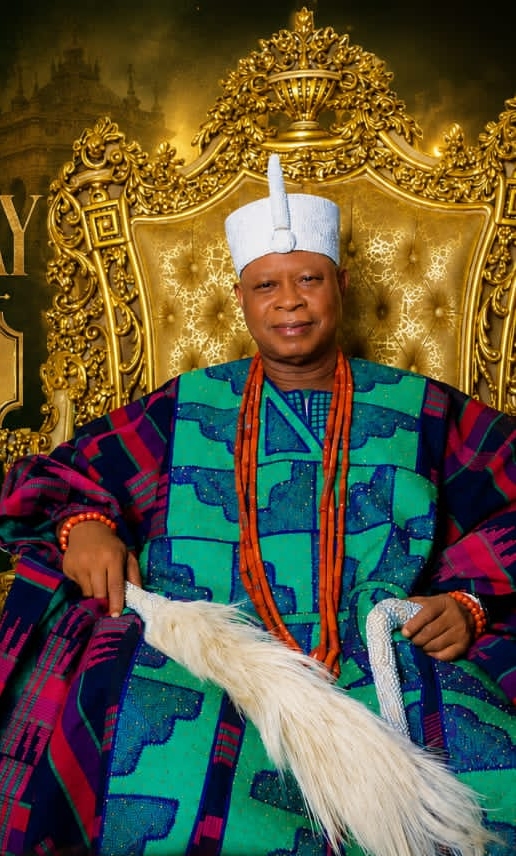
Yorùbá Sovereignty — Past, Present and Future
Delivered by His Royal Majesty Oba Joseph Adebayo Adewole, JP, OFR (Arojojoye II), Owa Ajero of Ijero Kingdom.
Yorùbá sovereignty refers to the self-governance and autonomy of the Yorùbá people. Historically, the Yorùbá had a complex system of governance with various city-states and kingdoms — the Ọ̀yọ́ Empire, Ifẹ̀ Kingdom, Ìjẹ̀bú Kingdom, Ẹ̀gbá Kingdom, and the sixteen well-recognised kingdoms of Ẹ̀kìtì Land, among others.
The Yorùbá traditional ruler is the custodian of the traditions, history and customs of his ethnic group, appointed by his people to rule, govern and administer justice in line with the laid-down customs and traditions of the land. A traditional ruler has also been defined as a person who, by virtue of his ancestral position, occupies the throne or stool of an area and who has been appointed to it in accordance with the customs and traditions of the area.
On the other hand, he is defined as a person who, by reason of inheritance or lineage, has been appointed to a chieftaincy position by those entitled to do so under customary law, and whose appointment has been approved by the approving authorities. (Afe Babalola)
The Pre-Colonial Era
The pre-colonial era featured a well-structured system of traditional rulership that was basically centralised. In Yorùbá land, access to the rulership stool was hereditary. Traditional rulers occupied the most important positions among the people. As noted earlier, their positions were legitimised by the traditions, history and culture of their respective peoples, who held them in high esteem and reverence (Amusa, 2010).
In a similar perspective, traditional rulers cater for the economic, social and political aspirations of their people, and they became part of individual cultural heritage. They occupy communal political leadership positions sanctified by cultural, moral and traditional values, and enjoying the legitimacy of a particular community to direct their affairs.
Traditional institutions constitute a body of polity and administration that are respected by the people through their respect for cultural heritage and the historical antecedents of the land. The political institution of pre-colonial societies included the paramount king and their Chiefs. They equally played a major role in matters of conflict resolution, dispute management and security.
In pre-colonial Nigeria, the societies had series of mechanisms of controlling and managing conflicts, varying from one community to another. Traditional rulers in each pre-colonial society obtained their mandate from the society's customs and native laws. As a result, they based their security maintenance, crime prevention and general law enforcement on each society's historical circumstances and desires. Members of society, collectively and individually, played roles in law enforcement efforts.
One of the main reasons for the wide acceptance of the traditional methods and procedures is that the people tend to know their traditional rulers very well. They have reasonable knowledge of each title-holder's morals, values and ethics (Afe Babalola). The totality of the headship of the political, judicial, cultural and religious were fully subsumed in the Ọba. As such, they held the power of life and death over their people.
Yorùbá Traditional Rulers Under the British Colonial Masters
The advent of colonial rule in Nigeria occasioned a major paradigm shift in traditional rulership. In the colonial era, the British system of colonial administration employed the system of Indirect Rule in Northern and Western Nigeria.
“Indirect Rule utilised the existing traditional system of administration and recognised the status of traditional rulers, who served as the priests of indirect rule.”
Colonialism ushered in a transformation in the role of traditional rulers. This change was necessitated by the desire to realise the objectives of colonialism — to exploit the natural resources of Nigeria to meet the industrial needs of the capitalist metropolises. Traditional rulers were used to serve these objectives. The underlying logic of ruling through these traditional rulers was primarily cost, as well as the logistical difficulties of directly governing so vast an area with so few officials.
Characteristics of Indirect Rule
- Local leaders as intermediaries: Colonial powers relied on local leaders — chiefs, emirs, kings — to govern their people and implement colonial policies.
- Native Authorities: Local leaders were organised into Native Authorities responsible for collecting taxes, maintaining law and order, and providing basic services.
- Colonial supervision: British District Officers supervised the Native Authorities and ensured colonial policies were implemented.
- Limited representation: Local leaders had limited representation in the colonial government; their powers were restricted by colonial officials.
How Indirect Rule Worked
- British officials appointed local leaders based on loyalty.
- Native Authorities collected taxes, maintained order, and provided basic services such as healthcare and education.
- District Officers supervised, advised, and enforced colonial policies.
- Native Authorities reported to District Officers, who reported to higher colonial authorities.
Advantages and Disadvantages
Advantages
- • Cost-effective for colonial powers
- • Less resistance from local populations
- • Preservation of local customs and institutions
Disadvantages
- • Limited accountability of local leaders
- • Inequitable distribution of power and resources
- • Undermining of local autonomy and self-governance
Impact of Indirect Rule
- Legacy of authoritarianism and limited democracy
- Uneven development and economic disparities
- Cultural assimilation and erosion of traditional practices
- Artificial boundaries and divided communities
Overall, Indirect Rule was a complex system that allowed colonial powers to govern while maintaining a degree of local autonomy. Its legacy continues to influence the social, economic and political structures of former colonies.
The Consequences of Indirect Rule
Social Consequences
- Reinforcement of traditional hierarchies — often favouring certain groups over others.
- Creation of new elites more loyal to colonial powers than to their own people.
- Disruption of traditional social systems, changing family structures and land ownership.
Economic Consequences
- Exploitation of natural resources — minerals, timber and agriculture — for the benefit of colonial powers.
- Imposition of colonial economic systems, disrupting traditional economic practices and deepening inequality.
- Limited economic development, with a focus on extraction rather than investment.
Political Consequences
- Undermining of local autonomy as decision-making concentrated in the hands of colonial officials.
- Creation of artificial boundaries that divided communities and seeded future conflicts.
- Legacy of authoritarianism, with local leaders accountable upward rather than to their people.
Cultural Consequences
- Erosion of traditional cultures as colonial values were imposed.
- Loss of cultural heritage — artifacts, languages, customs.
- Cultural assimilation and adoption of colonial values.
With approaching Nigerian independence, traditional rulers were recognised and strengthened by the creation of the House of Chiefs as the upper chamber of the legislature. Prior to this, Richard's Constitution of 1946, Macpherson's Constitution of 1951 and the Republican Constitution of 1963 also recognised traditional rulers and town unions in Northern, Western and Eastern Nigeria respectively (Ehindero, 1991).
Yet, after the coup of January 1966, the military government under General J. T. Aguiyi-Ironsi abolished all chieftaincy institutions, ethnic and socio-cultural organisations that once served as channels of local governance, through the promulgated Decree No. 33 of the Military Ruling Council. Decree No. 34 of May 24, 1966 similarly abolished regional governance and solidified the unitary structure at the federal level. These in all ramifications severed the remaining stable trajectory held by traditional rulers in their local communities.
Exacerbating the waning of traditional rulers further was the 1976 political reform of the Federal Government. This tightened the unitary structure at the federal level, leaving no space for traditional rulers to exercise effective authority in their communities. The 1979 Constitution deepened the situation by excluding traditional rulers from formal legislative roles and limiting them to advisory functions. The 1999 Constitution asserts:
“The council shall have power to advise the governor on any matter relating to customary law or cultural affairs, inter-communal relations and chieftaincy matters. Also, the council shall advise the governor whenever requested to do so on the maintenance of public order within the state, and such other matters as the governor may direct.”
Thus, the 1999 Constitution did not make any provision for traditional rulers to exercise political power. They are not even represented in the Council of State. It weakened further the powers of traditional rulers as agents of community participation in local governance, denying them constitutional roles and relegating them to advisory positions.
Other factors have also contributed: government proscription and suspension of some traditional rulers, government mutilation or balkanising of communities through the creation of autonomous communities, and politicisation by many government officials. These days, traditional rulers attract financial support from government, special agencies, philanthropists and donors. Struggles for control of these deliveries have ruined local governance, peace and stability expected from traditional rulers in many communities.
Axiological Solution to the Waning of Traditional Rulership
The Nigerian constitution weakened the powers of traditional rulers by failing to accord them powers necessary for adequate and effective local governance, even where they are entitled to stipends. The constitution rather describes their offices as ceremonial and advisory. Yet, anyone who has had the opportunity of interacting with most of these traditional rulers will attest to their intelligence, soundness, education, knowledge and versatility in different disciplines of life (Nworah, 2009). These evident capacities point to the fact that traditional rulers would have been more effective in local governance if fully backed by the state constitution and government at all levels.
For effective local governance therefore, traditional rulers should be constitutionally empowered. In this way, their functions and roles would be streamlined towards harmonious relationship and collaboration that will foster effective local governance. This constitutional back-up will reduce the often-confrontations between traditional rulers which have ruined local governance in many Nigerian communities.
Government should encourage traditional rulers to apply humanity and prudence in their relationship with their subjects, to exhibit a sense of belonging and an attitude that will ensure indigenous people's active participation in local governance. This entails being more transparent and accountable when spending community funds and executing development projects — qualities that will accord dignity, trust and encourage more donors to participate.
Government should indeed make traditional rulers more relevant as the image-makers of the communities. This relevance will be effective when government officially confers on traditional rulers the powers of interpreting the customs and traditions of their communities. Traditional institutions, as custodians, should be allowed to have the final say regarding cultural, traditional and customary matters.
To save the collapsing traditional rulers, there is need for local and state governments to organise periodic workshops on capacity building for traditional rulers. At the same time, government must halt their influences on the selection process: selection of traditional rulers should be in accordance with customary laws, traditions and the concerned community's constitution. This will boost integrity, legitimacy and people's support.
“A throne that is rooted in the people, and empowered by the law, is a throne that will nourish generations yet unborn.”
Àṣẹ o. Kí Ìjẹ̀rọ̀ dàgbà, kí Yorùbá gbèrú.
— HRM Oba Joseph Adebayo Adewole, JP, OFR
Arojojoye II · Owa Ajero of Ijero Kingdom